
- Category: Space Y News
- 2026-01-30
The 18th European Space Conference marked a decisive moment for Europe’s space sector. Taking place shortly after the latest ESA Ministerial Council and amid ongoing negotiations on the next EU Multiannual Financial Framework, the event underlined that 2026 must be the year Europe delivers on its space ambitions. Space is now widely recognised as a pillar of Europe’s security, industrial competitiveness, and strategic autonomy, and the conference highlighted concrete operational, regulatory, and funding developments with direct implications for downstream companies.
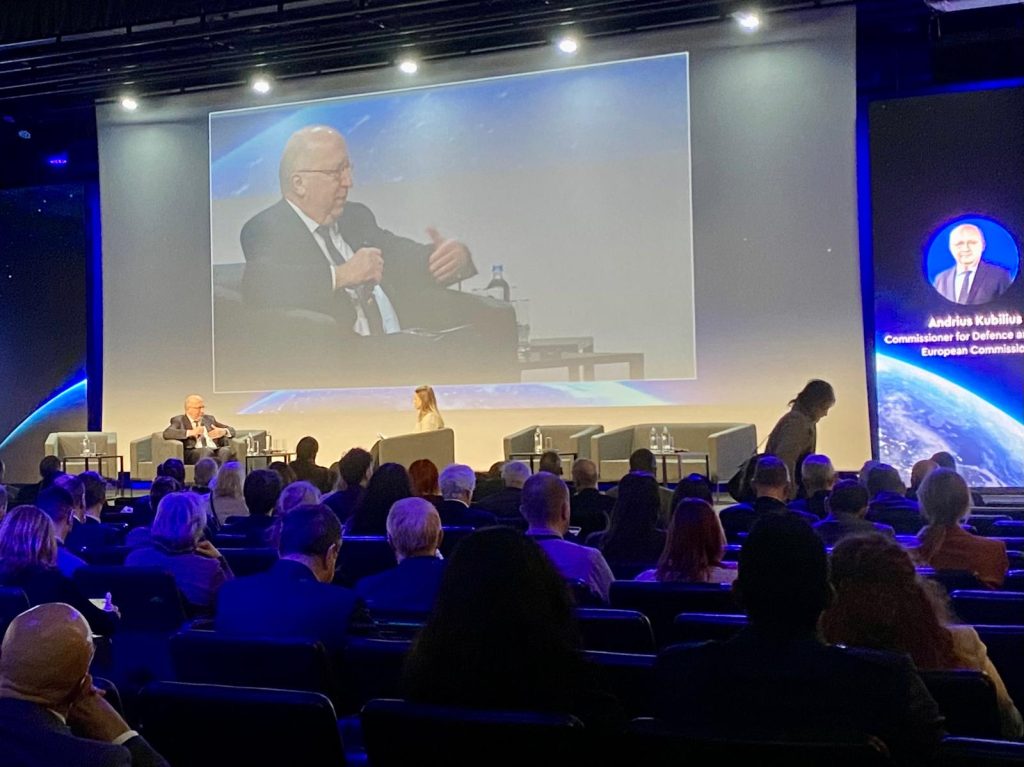
Security and resilience are increasingly shaping European space policy. In his keynote address, European Commissioner for Defence and Space Andrius Kubilius stressed that geopolitical tensions are pushing Member States to act in a more coordinated manner. This shift was reflected throughout the conference, notably in discussions on dual-use capabilities and on safeguarding the autonomy and sovereignty of the entire European space value chain.
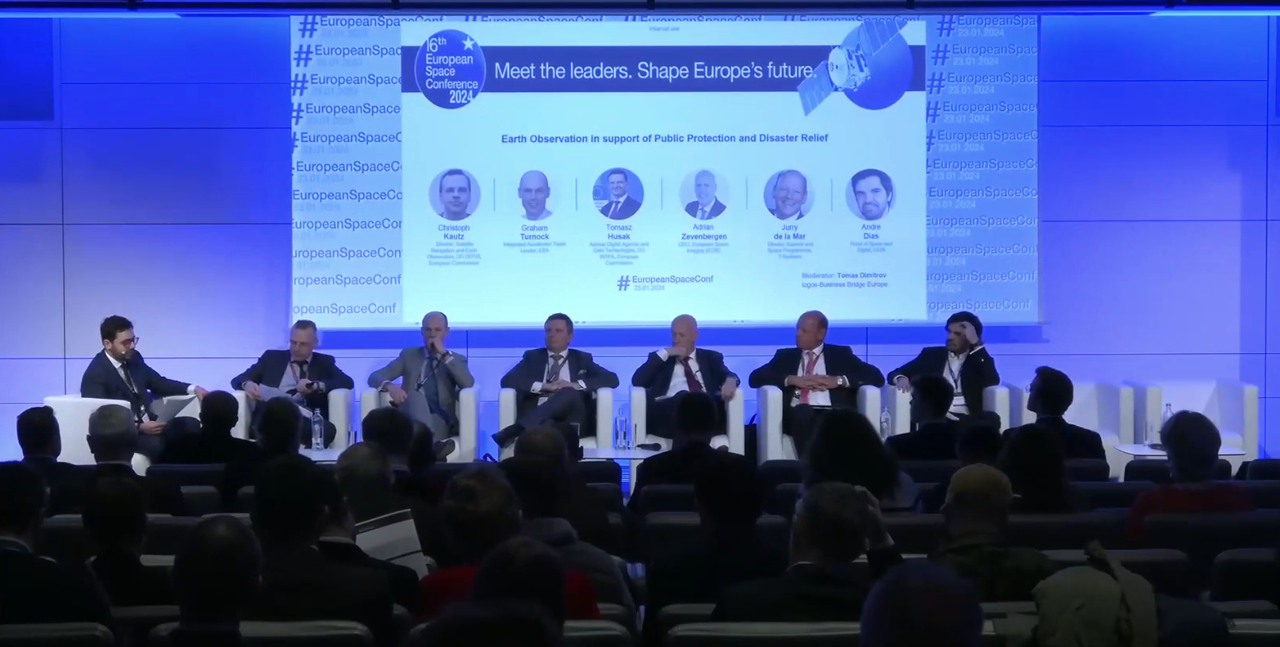
Numerous developments within the EU Space Programme highlight the growing maturity of downstream services. The Copernicus Data Space Ecosystem now offers cloud-based access to high-quality Earth Observation data and processing tools, lowering barriers for industrial users. In parallel, the proposed European Earth Observation Governmental Service (EOGS) aims to provide secure and authoritative EO data to support public authorities, as well as security- and defence-related decision-making. Dedicated sessions illustrated how EO capabilities are increasingly central to disaster risk management, from early warning and rapid mapping to crisis response and recovery. Initiatives such as the Digital Ocean further demonstrate how EO data, modelling, and digital platforms are being combined to support environmental monitoring, maritime activities, and sustainable ocean management.
In satellite navigation, Galileo’s Public Regulated Service (PRS) and the Open Service Navigation Message Authentication (OSNMA) were highlighted as key assets for resilience, offering protection against jamming and spoofing. These capabilities are essential to maintaining trusted positioning, navigation, and timing services in an increasingly contested environment.
Secure connectivity also featured prominently. The GOVSATCOM programme is now operational, pooling geostationary satellite capacities from several Member States to deliver secure, encrypted communications to all EU countries. Looking ahead, Commissioner Kubilius confirmed that military frequencies for the future IRIS² constellation have been secured, adding that initial services could be deployed as early as 2029. At the same time, industry representatives pointed to ongoing challenges related to ground terminals, supply chains, and governance, as well as growing competition from international players such as the TeraWave network recently announced by Blue Origin.
Access to space, along with Space Situational Awareness and Space Traffic Management (SSA/STM), were also discussed as critical enablers for downstream services. Expanding capabilities under the EU Space Surveillance and Tracking (EU SST) partnership are essential to protect space assets, manage orbital congestion, and ensure the continuity of services on which many commercial applications depend.
In addition to operational capabilities, the conference highlighted broader European efforts to strengthen resilience across space domains. ESA is developing the concept of “resilience from space,” an initiative exploring ways to coordinate navigation, Earth observation, secure connectivity, and space surveillance. The aim is to enhance the reliability, robustness, and integration of Europe’s space infrastructure, leveraging existing EU and national assets.
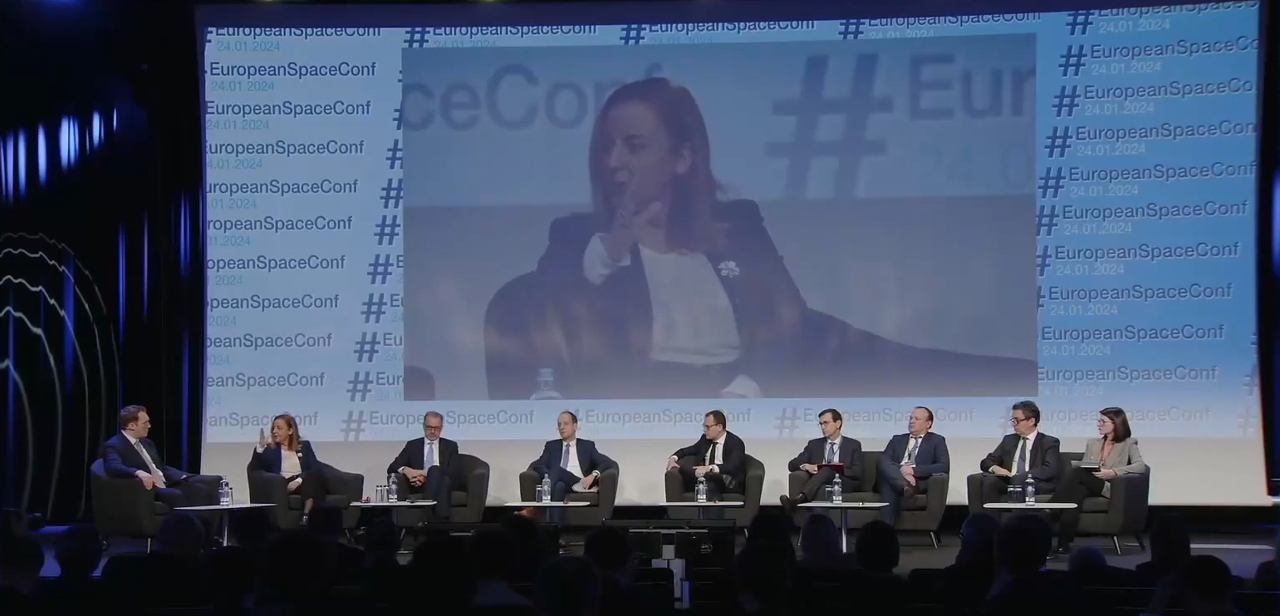
A strong emphasis was also placed on the need for a clear and predictable regulatory framework. In this context, the proposed EU Space Act was discussed as a key initiative to address safety, resilience, and environmental sustainability, while ensuring a level playing field across the Single Market. For downstream actors, the initiative is expected to improve legal certainty and long-term visibility, creating more favourable conditions for investment, innovation, and market uptake of space-based services.
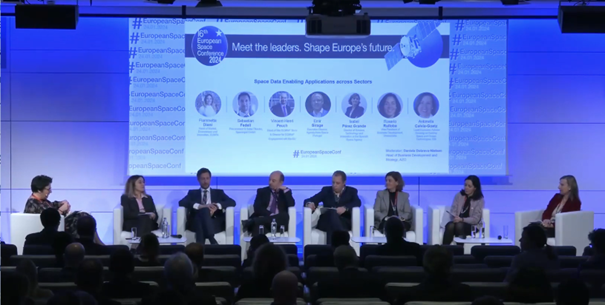
Competitiveness and innovation remained central themes throughout the conference. Instruments such as the new European Competitiveness Fund and established programmes like CASSINI are designed to support start-ups and SMEs in scaling up and bringing space-based solutions to market. In addition, new Horizon Europe calls and In-Orbit Demonstration and Validation opportunities will provide concrete pathways to test technologies and accelerate the transition from innovation to operational services. Industry participants repeatedly stressed the importance of long-term public contracts and regulatory clarity to strengthen Europe’s downstream space ecosystem.
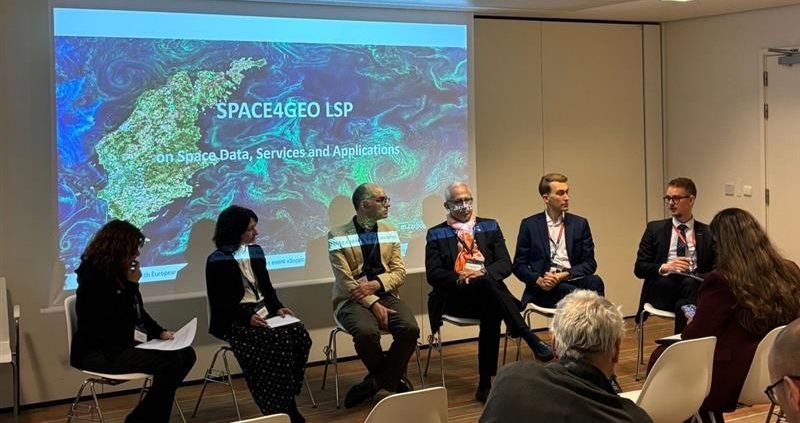
Space Y participated actively in the conference, including the Space4GEO General Assembly, contributing to a roundtable on attracting and retaining talent. The discussion highlighted the importance of multidisciplinary profiles, combining technical understanding with communication, data analysis, and service development skills, to fully exploit Europe’s operational space capabilities.
Overall, the conference made clear that Europe’s space policy is entering a phase focused on action and delivery. For downstream companies, the combination of mature services, emerging regulatory initiatives, targeted funding instruments, and a growing focus on autonomy, resilience, sustainability and economic competitiveness can create tangible opportunities to develop applications, scale businesses, and contribute to Europe’s strategic objectives.